
Available inEnglishFrenchGermanHindiPortugueseRussianSpanish
Human Anatomy Basics: Bones, Muscles, Organs
Name a ringed structure on an unlabelled plate, its neighbour and what it does, typed cold the way a lab practical or an MCAT stem asks. For the pre-med or pre-nursing student three weeks from an exam who has had one lecture pass. Eighty-six cards in twelve chapters run from directional terms through skeleton, muscle, nerve, heart, lungs, gut, kidney and hormones; no cadaver photographs, no origin-and-insertion drill.
Which directional term describes the wrist relative to the elbow, and what does it mean?
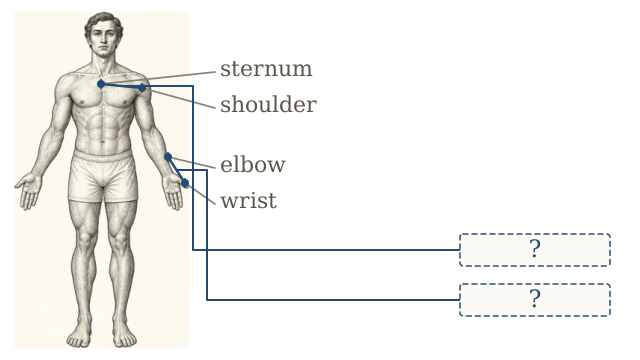
Distal, farther from where the limb attaches
— The pair runs along the limb, away from the trunk.
Source
Proximal means nearer the point of attachment, distal farther from it, and the pair is read along a limb: the elbow is proximal to the wrist, the wrist distal to the elbow. Every directional term is defined against the anatomical position — standing, facing forward, palms forward — which is why the thumb stays lateral even when the hand is turned over. Commonly confused with: superior and inferior, which measure height on the body and cannot say how far along a limb something lies.